Gregory's travel blog
Monday, August 19, 2019
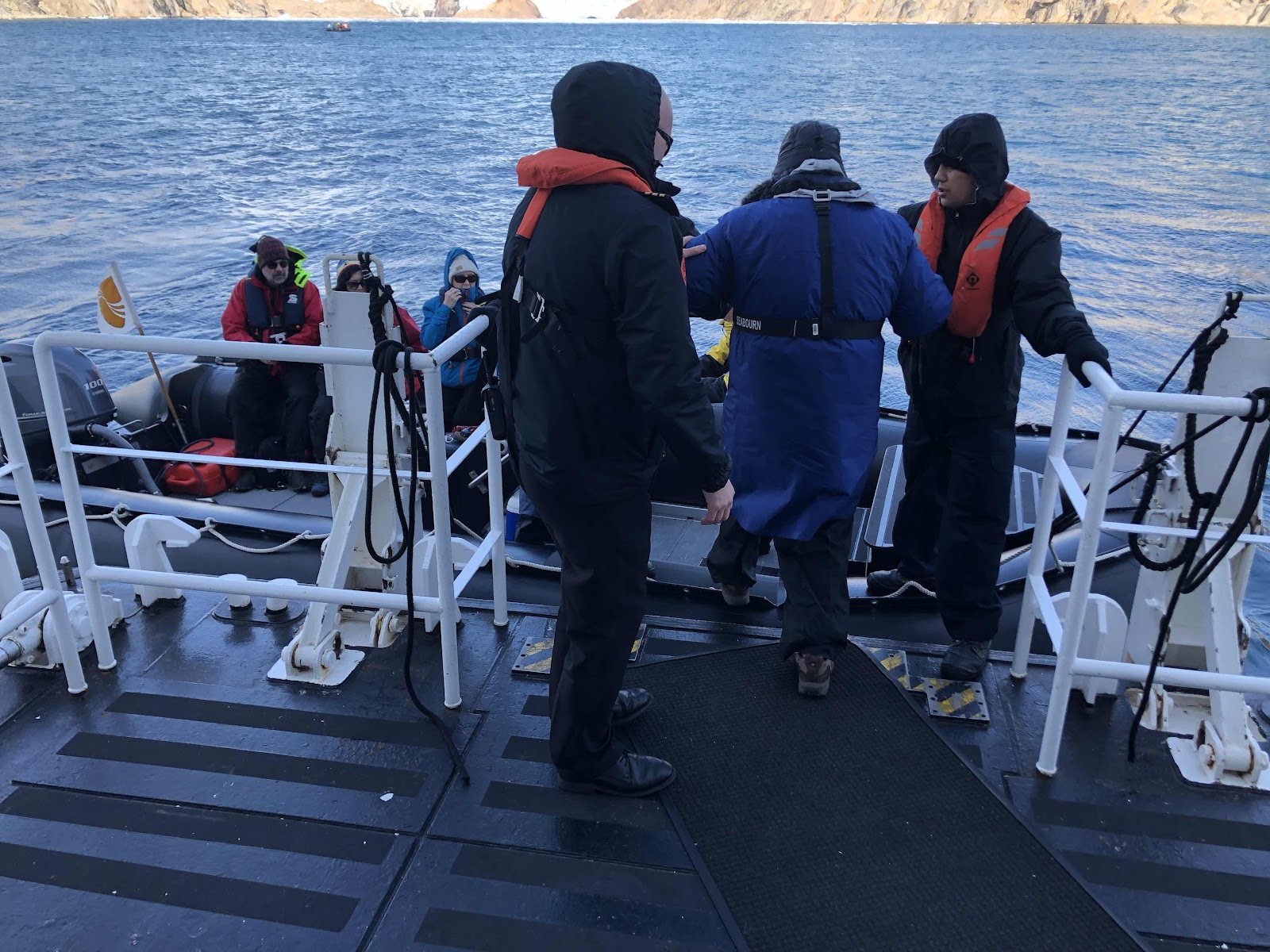
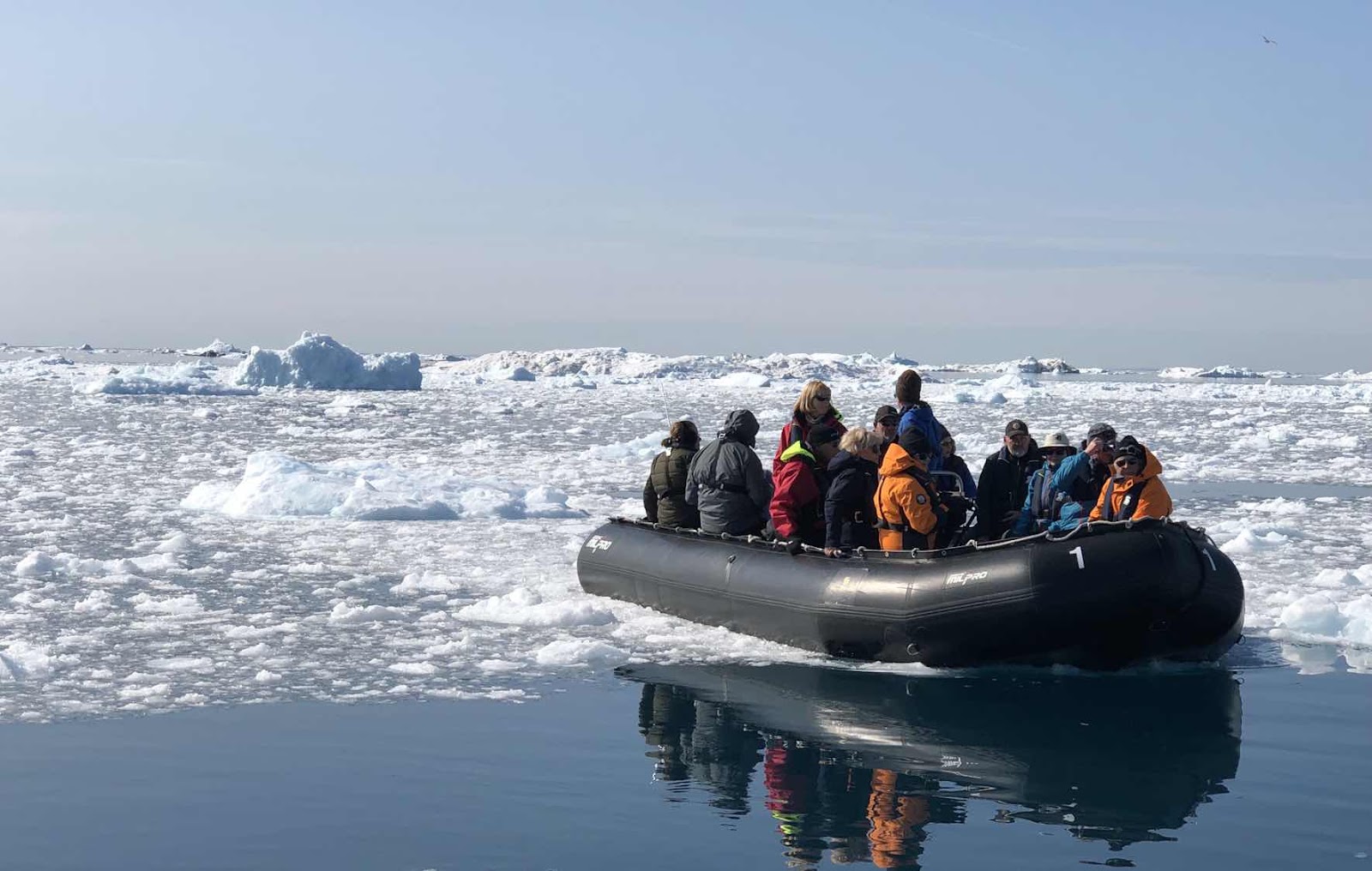
The zodiacs are pretty easy to climb into when the seas are calm. But when they’re not, it’s a different story. They bounce around and bang into the ship’s platform, so entry and exit can be a little dicey.
Besides being monumental, it was .....COLD.
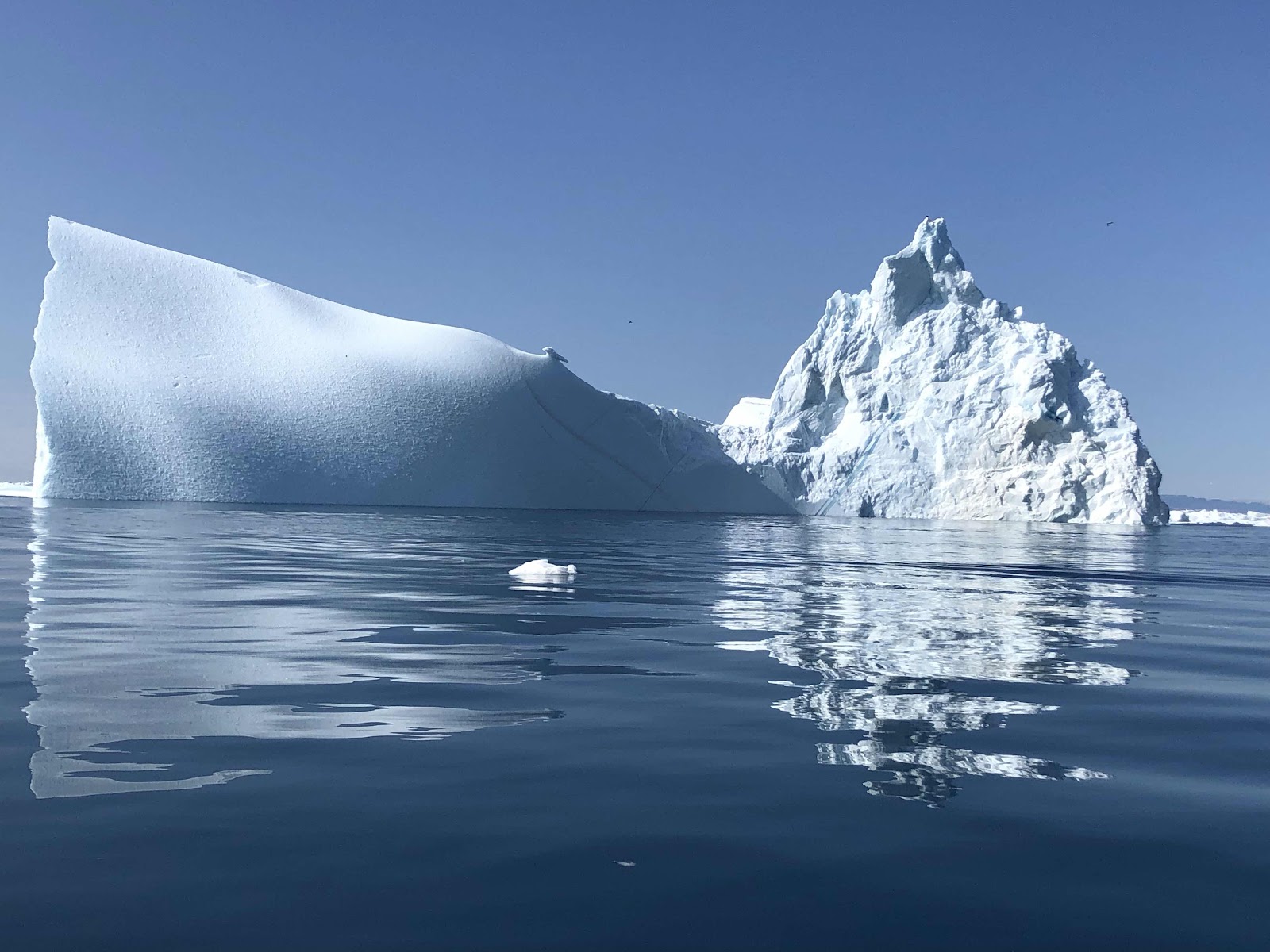
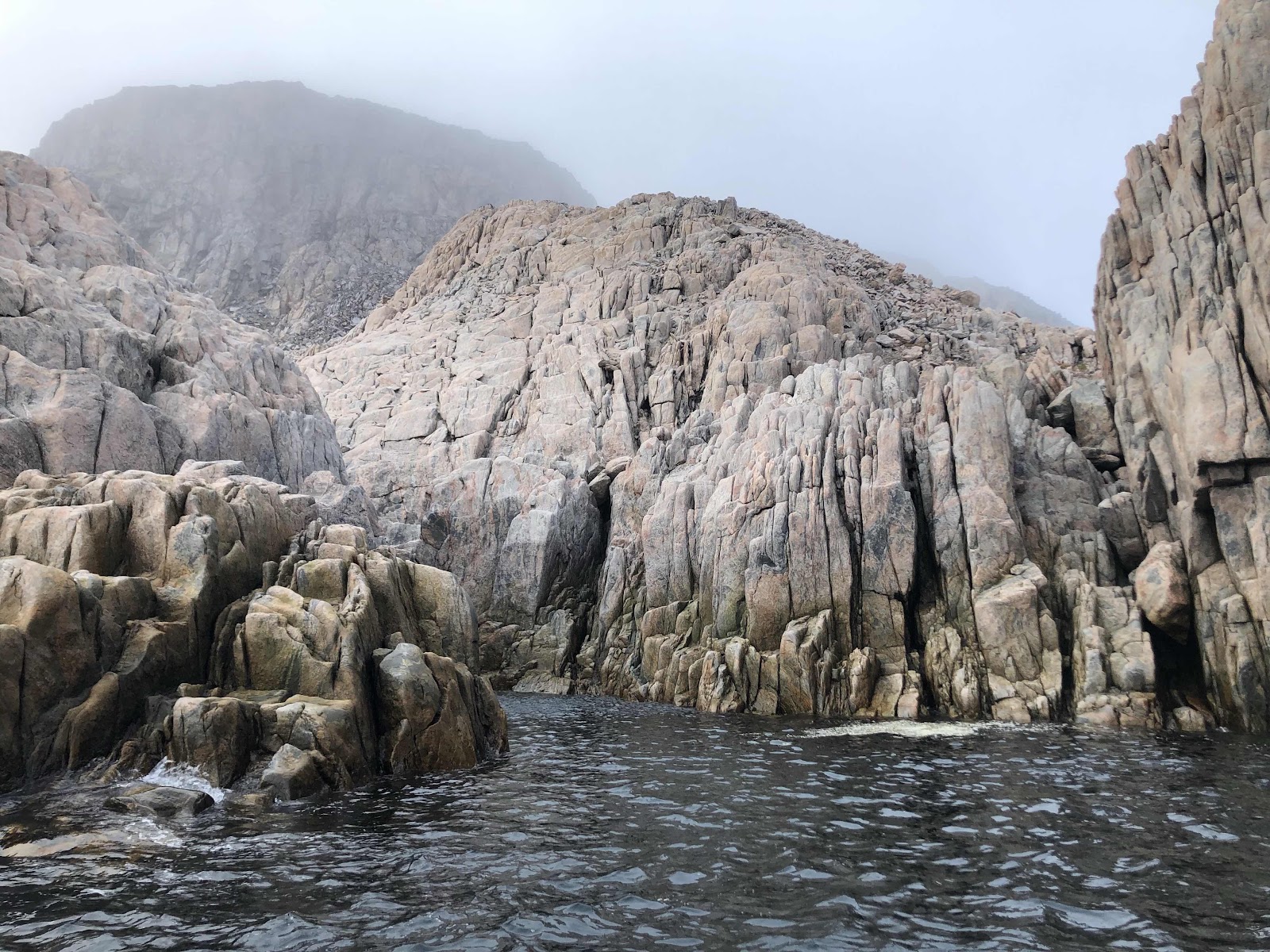
Monumental Island was indeed monumental, but we spotted no wildlife. There are icebergs here too, but they likely originated in Ilulissat (our last Greenland stop a week ago), and took years to float all the way to the Canadian coast.
Sunday, August 18, 2019
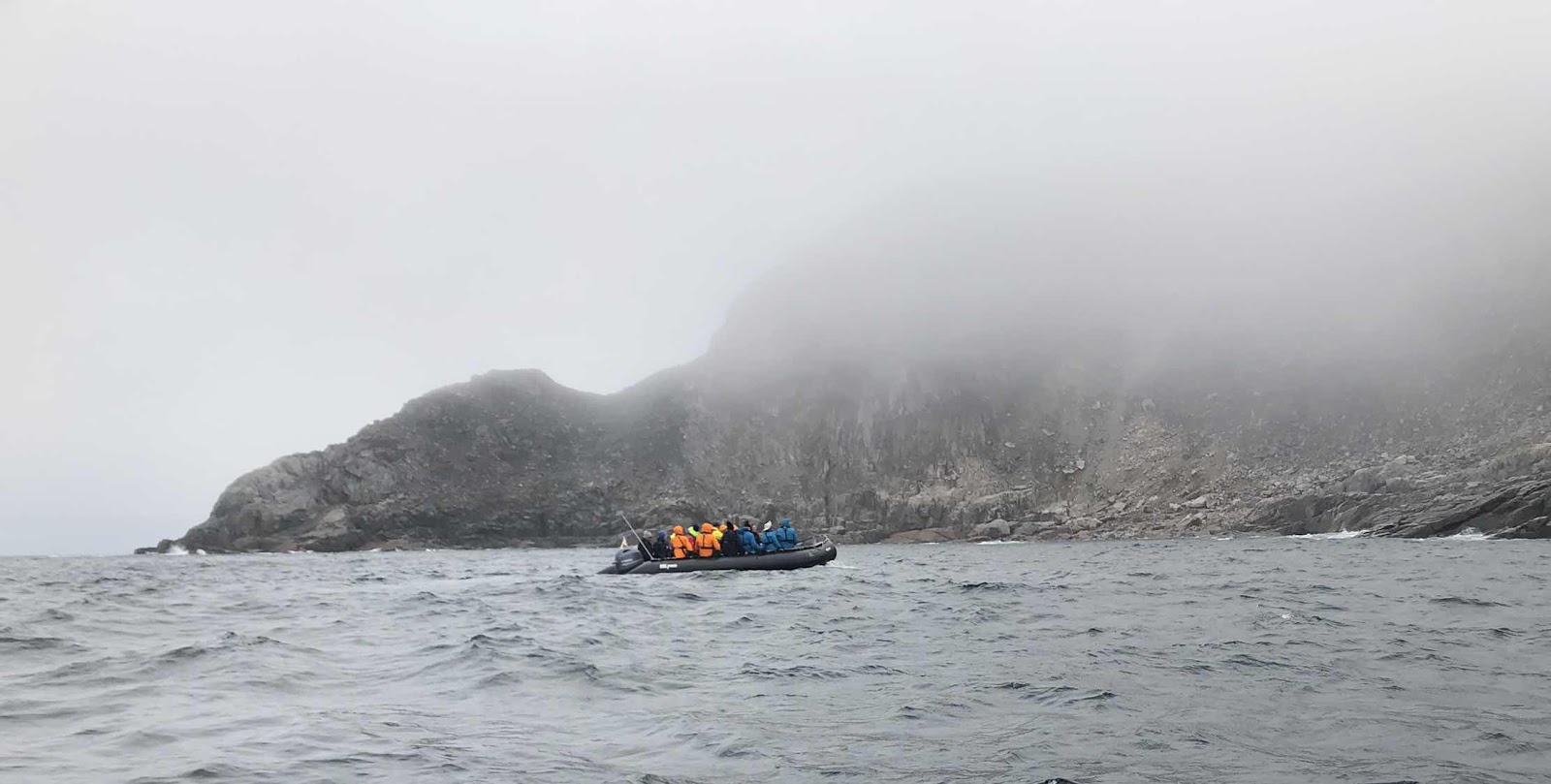
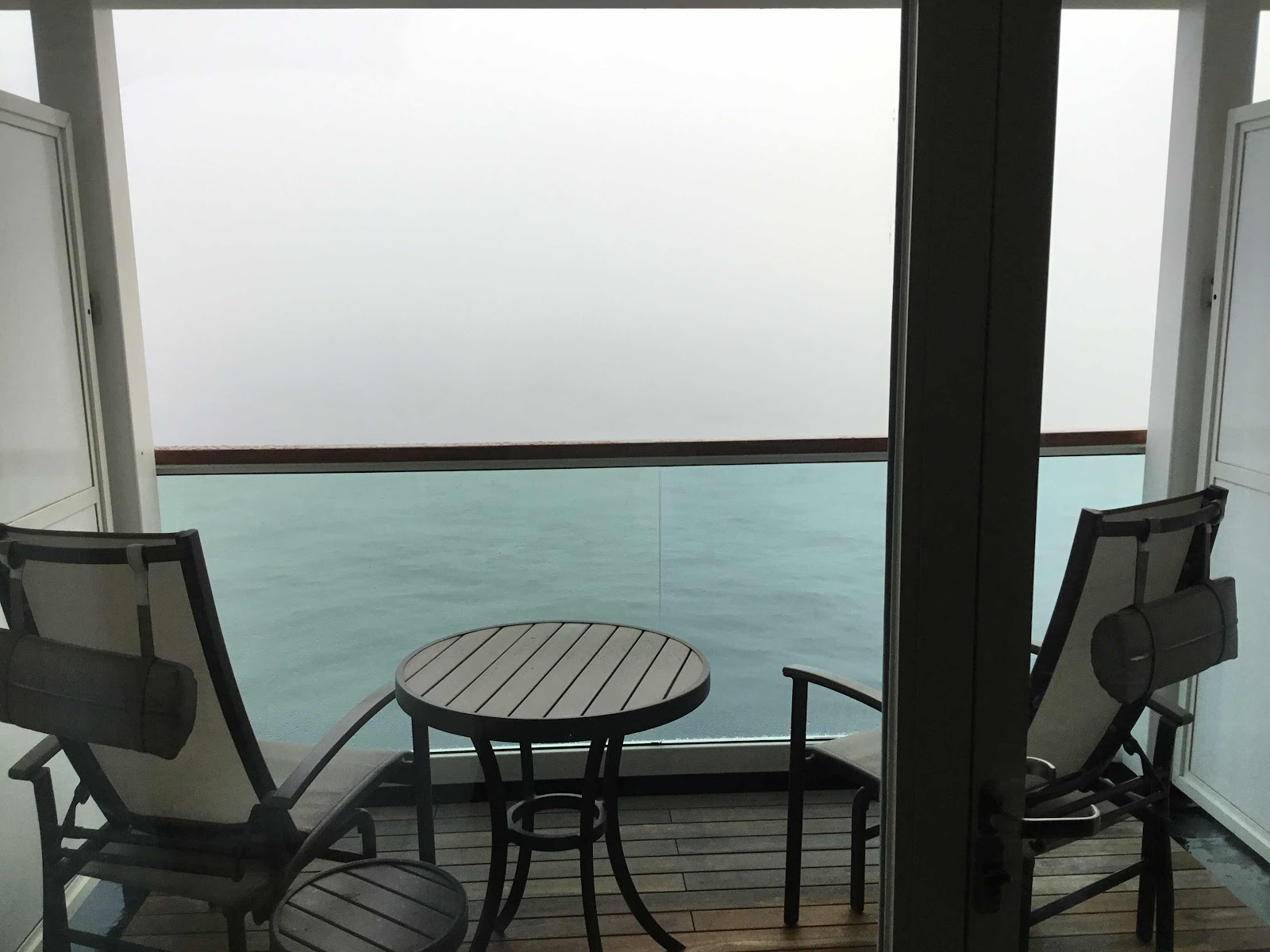
Nope. This one’s been been called off. Fog is too heavy to see anything, and of course, that also creates safety issues trying to run 6 or 8 zodiacs. Ah well, we’ve had excellent luck up until now.....😡
We’ve arrived at Lady Franklin island, in the Canadian Arctic. At 6:45AM, we can’t see a thing out our glass doors, so I have no idea whether the zodiacs will run or not. It’s unlikely we’ll need the binoculars......😎
Saturday, August 17, 2019
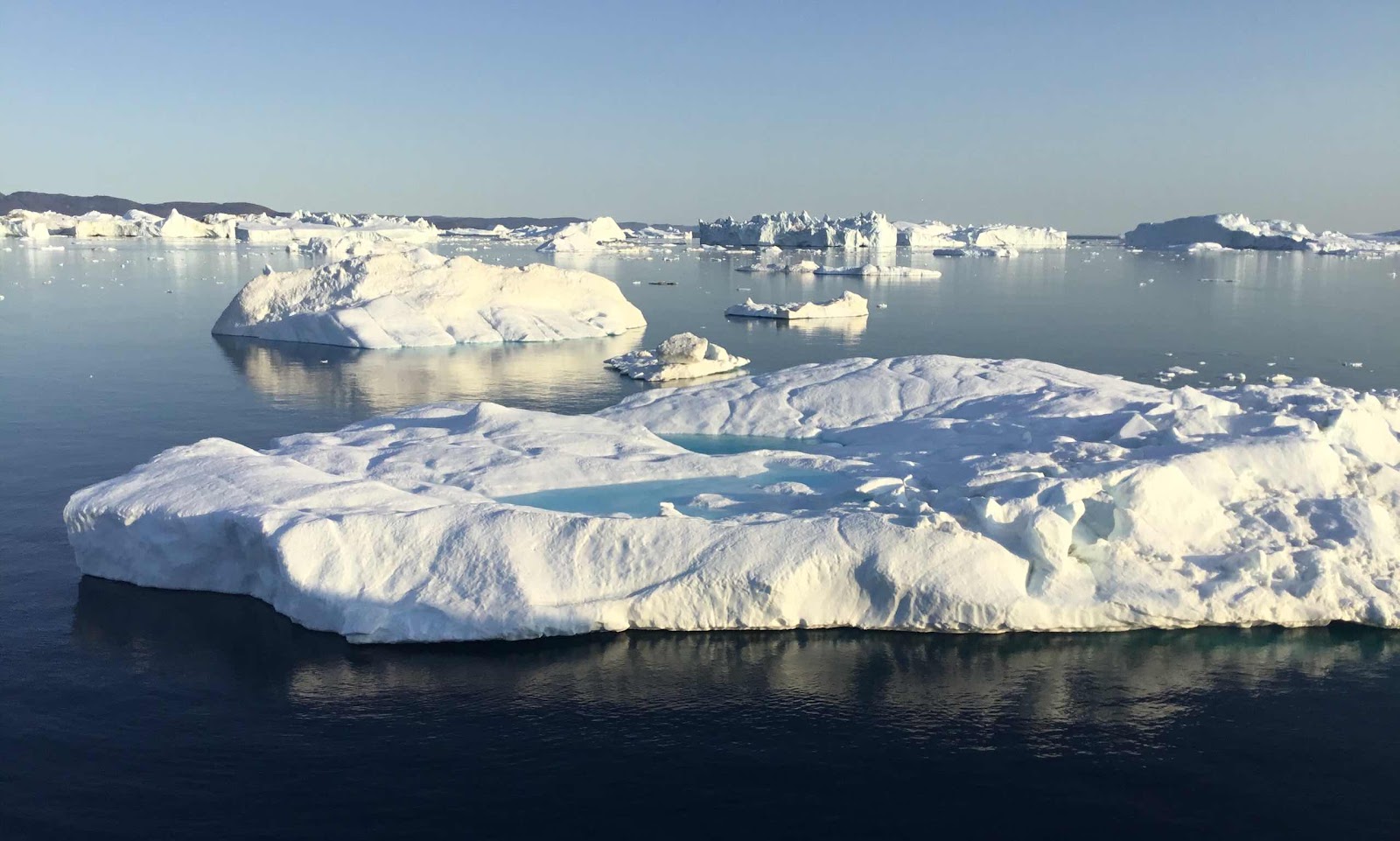
Unsure what the iceberg situation will be in the Canadian Arctic. But as we sailed away from Greenland, she gave us a nice show.
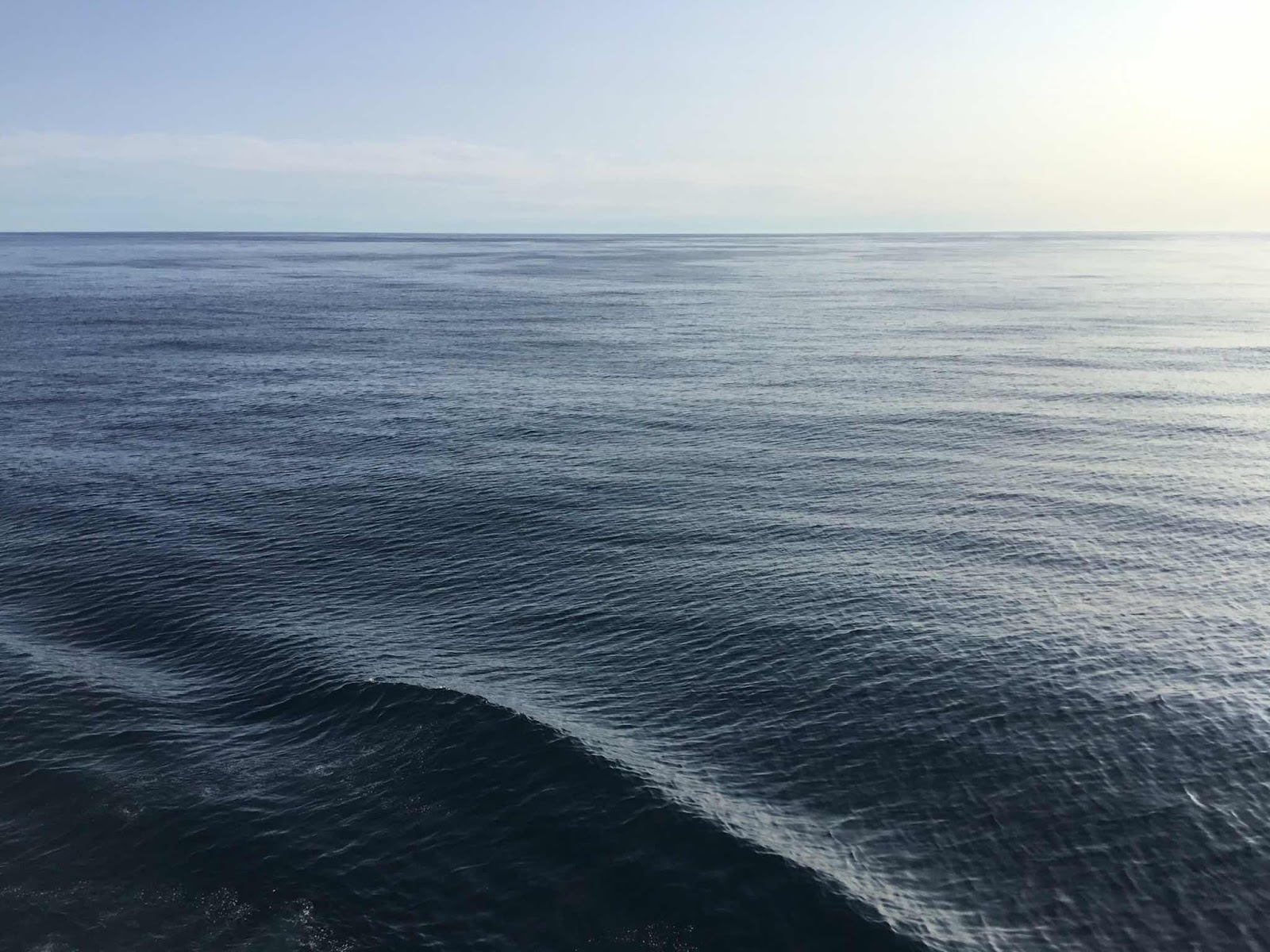
At present we are crossing the Davis Strait, having left our 8 stops in Greenland behind. Next up is Iqaluit on the Nunavut coast of Canada. So far I’m a little disappointed in the glassy seas, I rather expected (and hoped for) some rockin’ and rollin’.
Thursday, August 15, 2019
And yes, I did scoop up some glacial ice off the side of the zodiac, to bring back into the room, and put in our drinks. Ice that could be between 10,000 and 250,000 years old, but it tasted like.....ice.
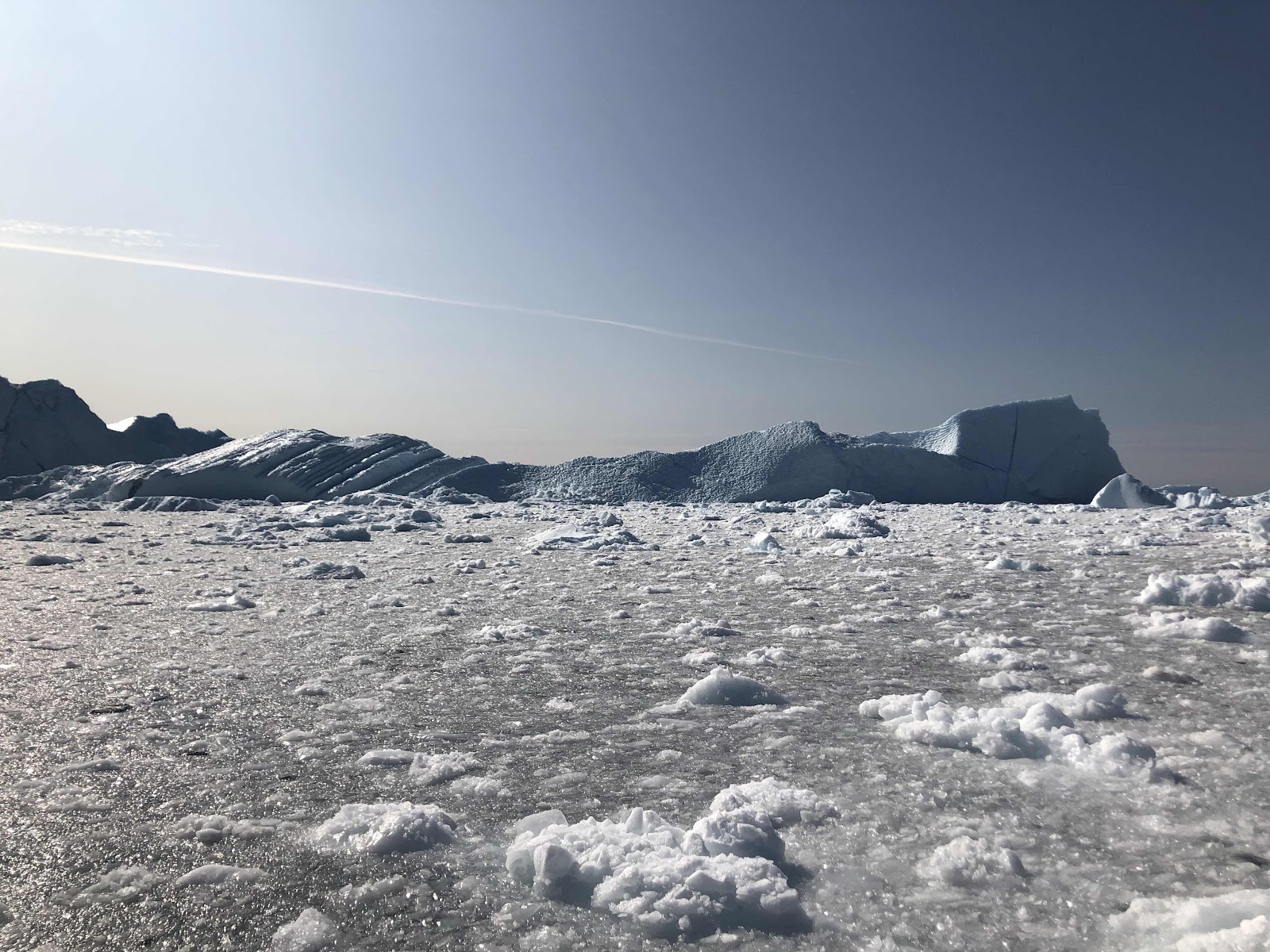
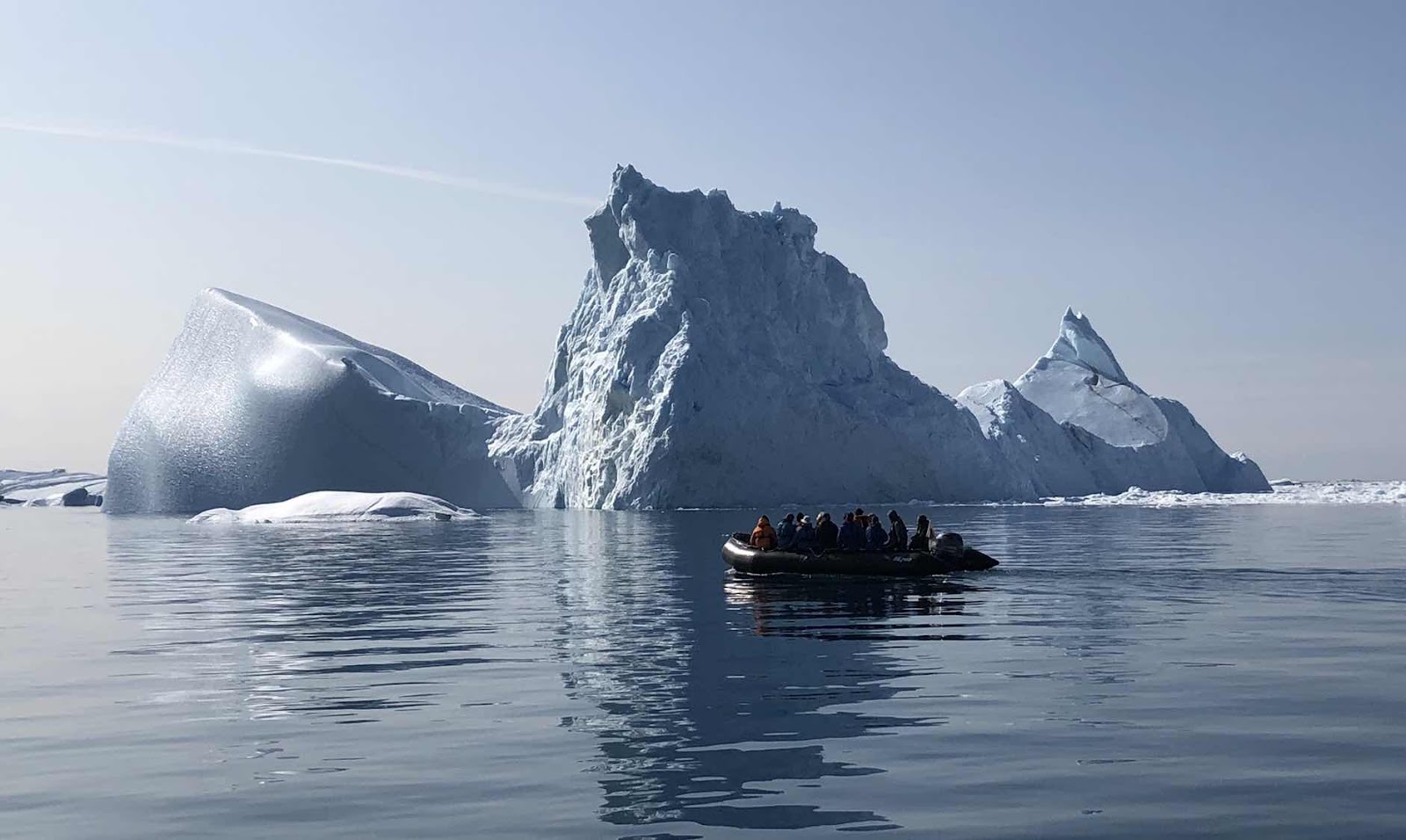
We’re now “experts” 😎 in why iceberg surfaces can look so different. The jagged stuff on the right broke free from the glacier and retains the shape it had, while the smooth one on the left was undoubtedly underwater for a long period of time. As they are constantly melting at the surface, and as only the top 10-15% is above the sea level, they are always subject to “turtling”, and an entirely new surface becomes the above-water portion.
Loved getting out into “iceberg soup”, where the zodiacs scrunched and plowed their way through large and small ice.
Ilulissat is the iceberg capital of the world. We are told that this glacier produces the vast majority of North Atlantic icebergs, so the speculation is that it produced the Titanic iceberg, that is, umm, famous in movies.
nearing midnight
Wednesday, August 14, 2019
We’re now further north than the 69° N latitude line, so we’re well above the Arctic Circle.
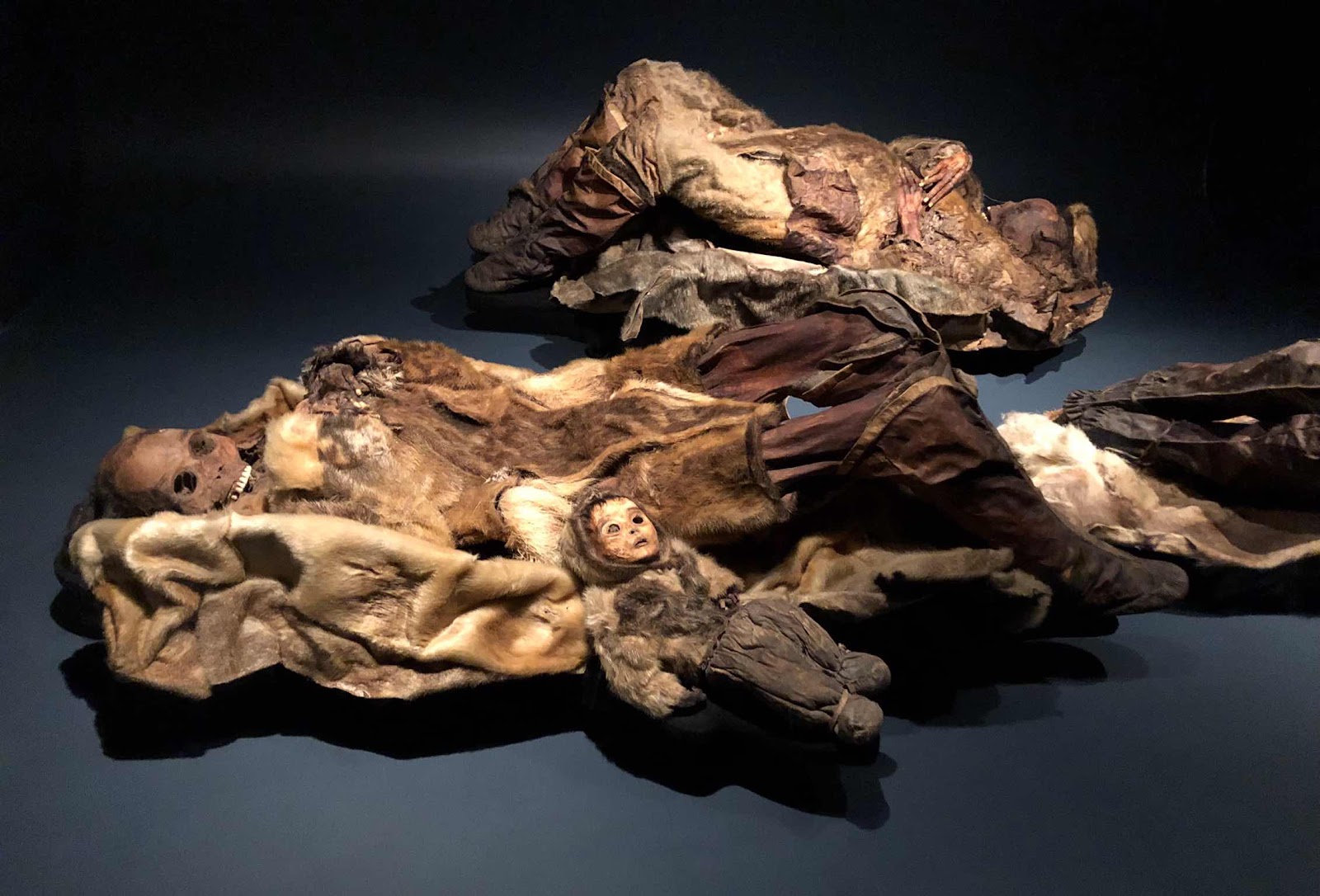
But by far the most dramatic exhibit was of several of the mummies discovered at Qilakitsoq. In the early 1970’s, 8 mummies were discovered by hunters. The story is fascinating, anyone interested can go to: https://en.m.wikipedia.org/wiki/Qilakitsoq. Four of the eight are on display, including the 6-month-old child, which looks unnervingly like a doll. Apparently the conditions for preservation just happened to be optimal, and so, for want of a kinder phrase, the mummies were “freeze dried” for hundreds of year. The fingers are particularly remarkable.
The carvings are wonderful - carved walrus ivory and reindeer antler, mostly. Ghoulish images, to ward off evil spirits.
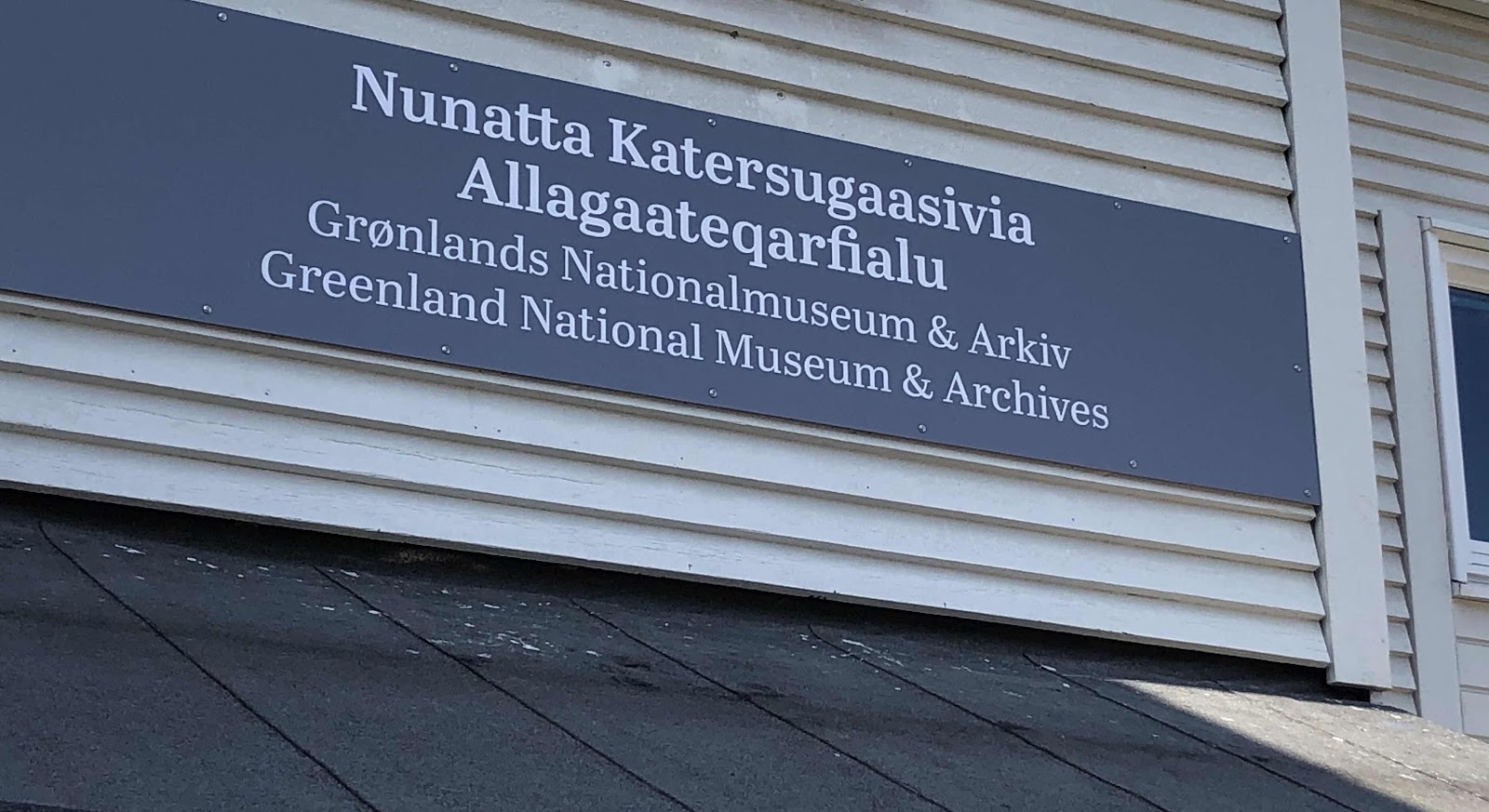
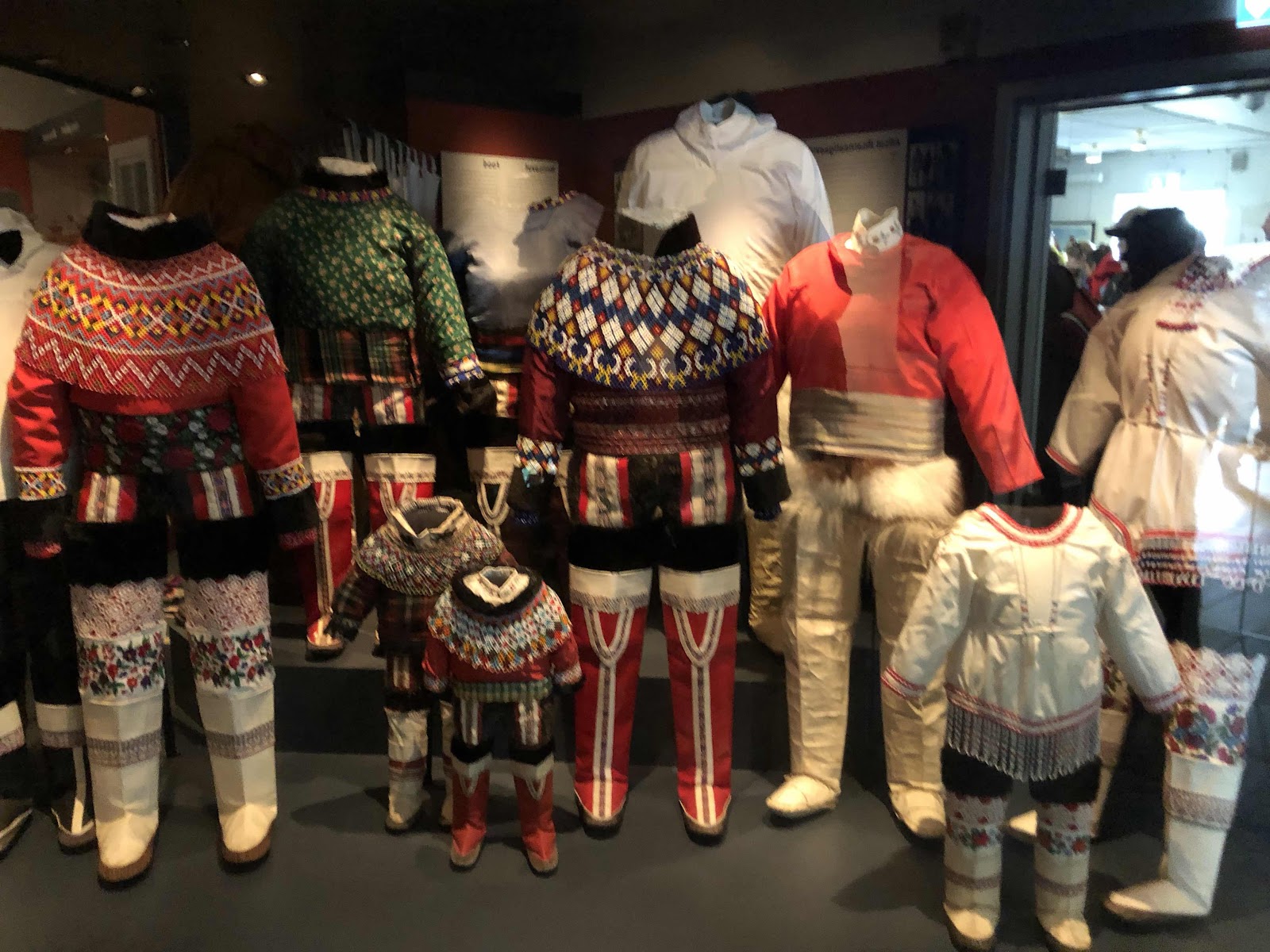
Nuuk is the capital and largest city in Greenland, population about 18,000. Greenland itself, in spite of its vast size, has a total population of under 60,000. Wes lent most of our visit at the Greenland National Museum, filed with artifacts from Saqqaq, Dorset, Thule, and Inuit cultures.
Tuesday, August 13, 2019
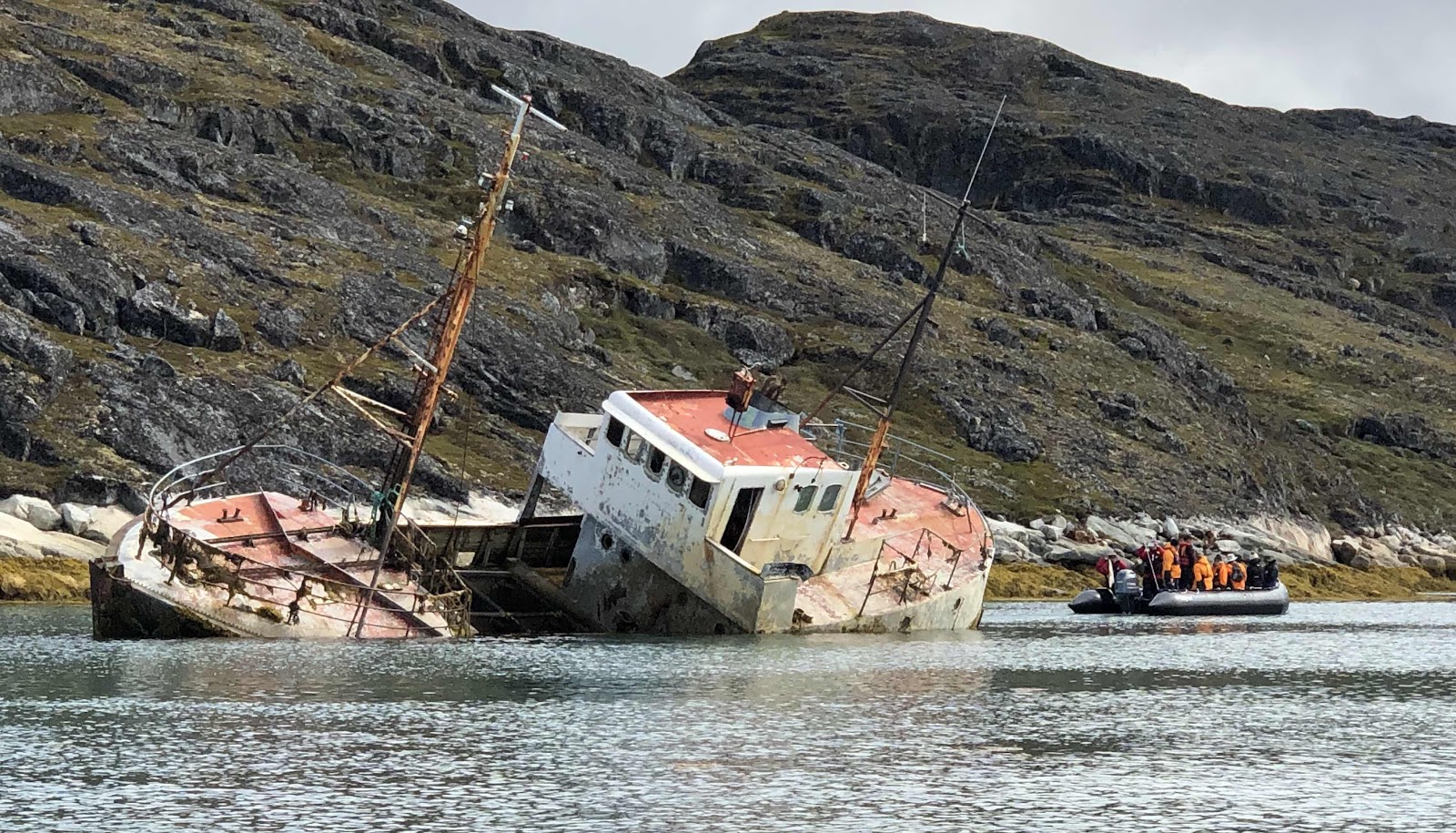
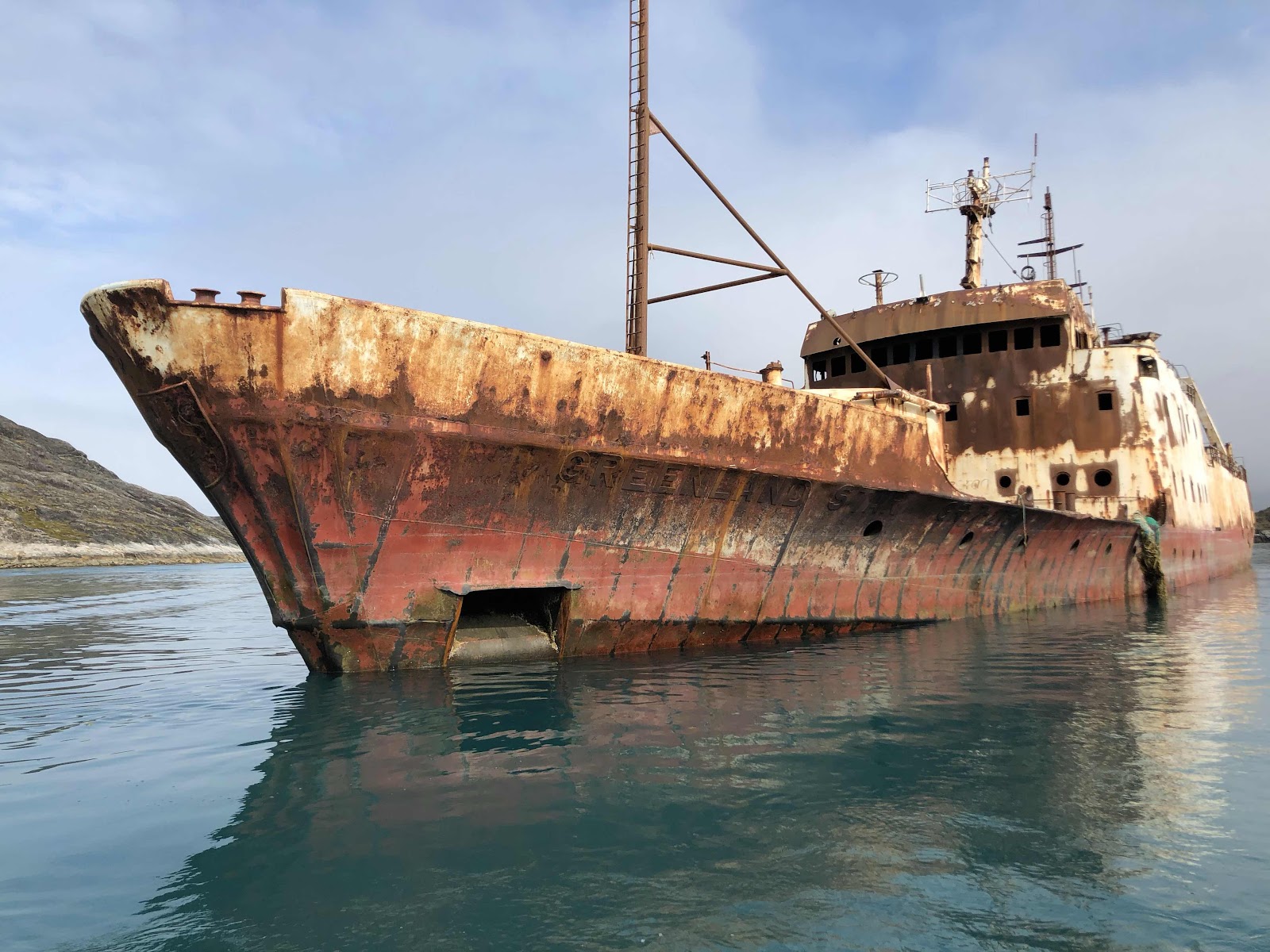
Think I forgot to post these. Not all the zodiac-ing we do is about flora and fauna. Here and there we see evidence of how unforgiving the weather and topography can be.
Newer Posts
Older Posts
Home
Subscribe to:
Posts (Atom)